
Provider Data Marketplace
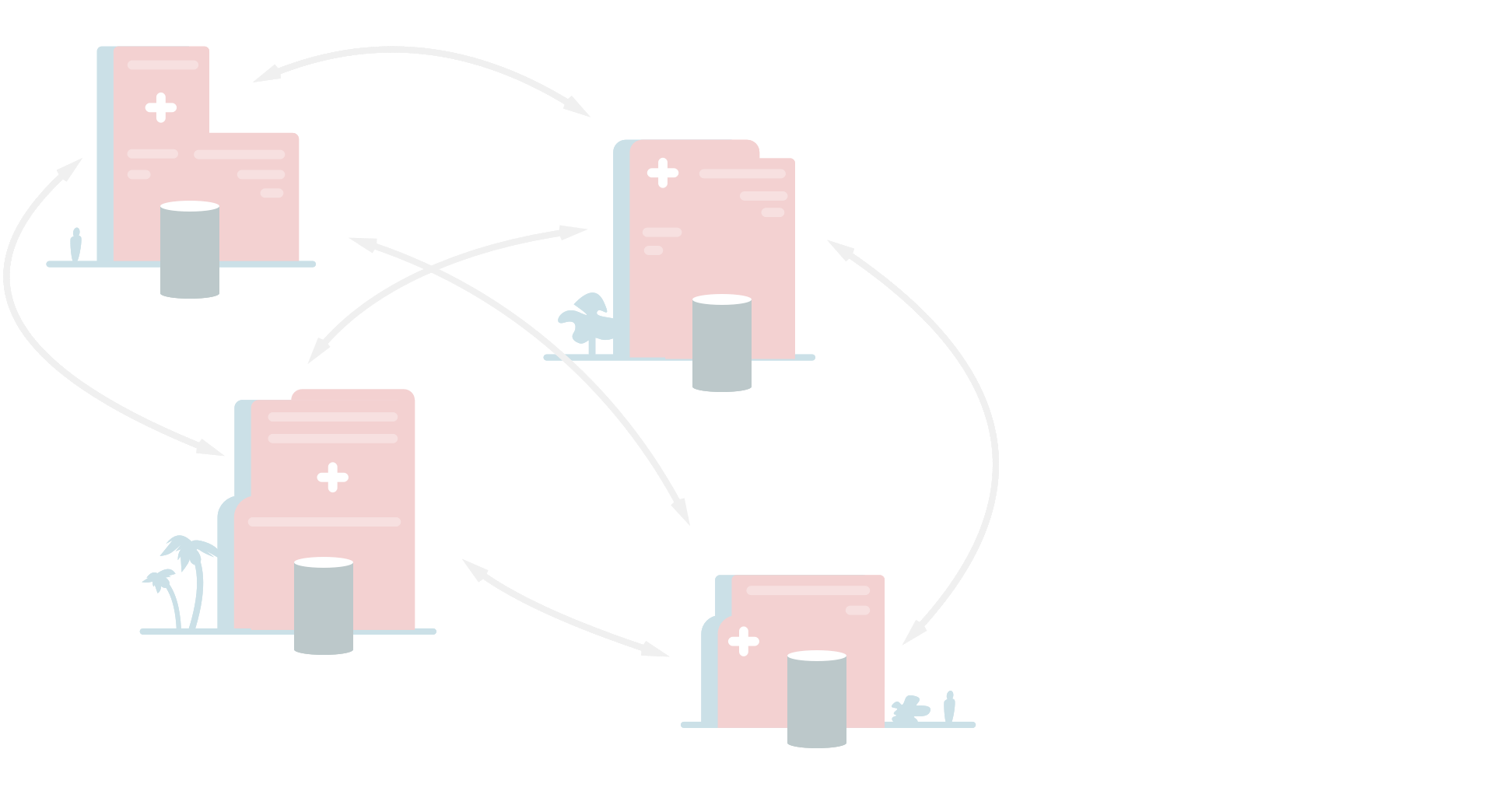
The Provider Data Marketplace is a web-based, distributed application for healthcare organizations to share data in a trustless, open, and secure way so that they can increase accuracy of their provider records while reducing waste and duplicative effort.
Problem
Health plan provider directories are an important tool for members, allowing them to search for ‘in-network’ doctors covered by their respective plan. Unfortunately, these provider directories often contain records that are inaccurate or incomplete leading to frustrated members.
In order to improve provider directory quality, insurance companies as well as other healthcare entities are independently spending millions on data management efforts. Considering that around half of all records contain at least one error, this siloed effort across health companies is duplicative and wasteful. A need for a distributed data marketplace was clear.
Provider data management (PDM) industry findings:
- Large health plans spend: $10-15M / year on provider data management yet, nearly 50% of provider listings in patient-facing directories contain an error.
- 4-5 Million Providers Total
- 2.5% Providers have a change monthly
- 1 in 3 Providers have a change annually
- 20% Outreach response rate
- 45% Directory entries incorrect
My role
From November 2017 to April 2018, I was part of a multi-disciplinary, human-centered software team as one of two product designers. We were supported by a development pair and a product manager that we collaborated with on a daily basis.
Aligning tribes
My team worked closely with a healthcare alliance made up of representatives from other insurance companies and healthcare organizations aligned on a common set of goals including distributing resources and improving data quality. Working with different members afforded us a variety of feedback and encouraged collaboration between organizations.
Initial hypothesis
By encouraging healthcare organizations to collaborate on provider data in an open, trustless, and secure way, we can break down silos and build trust across the care continuum in service of improving the lives of the humans that need care.
Primary User: Data Specialist
Historically works to identify problem records that need to either be updated or removed from the directory. In this new role, they would also make purchasing decisions on the provider data marketplace for records that they need based on their data maintenance process.
Technology Considerations:
Blockchain technology was used as a distributed database for storing records on an immutable transaction ledger
Designed for larger desktop viewports due to productivity and efficiency enablement
Realizing a data marketplace
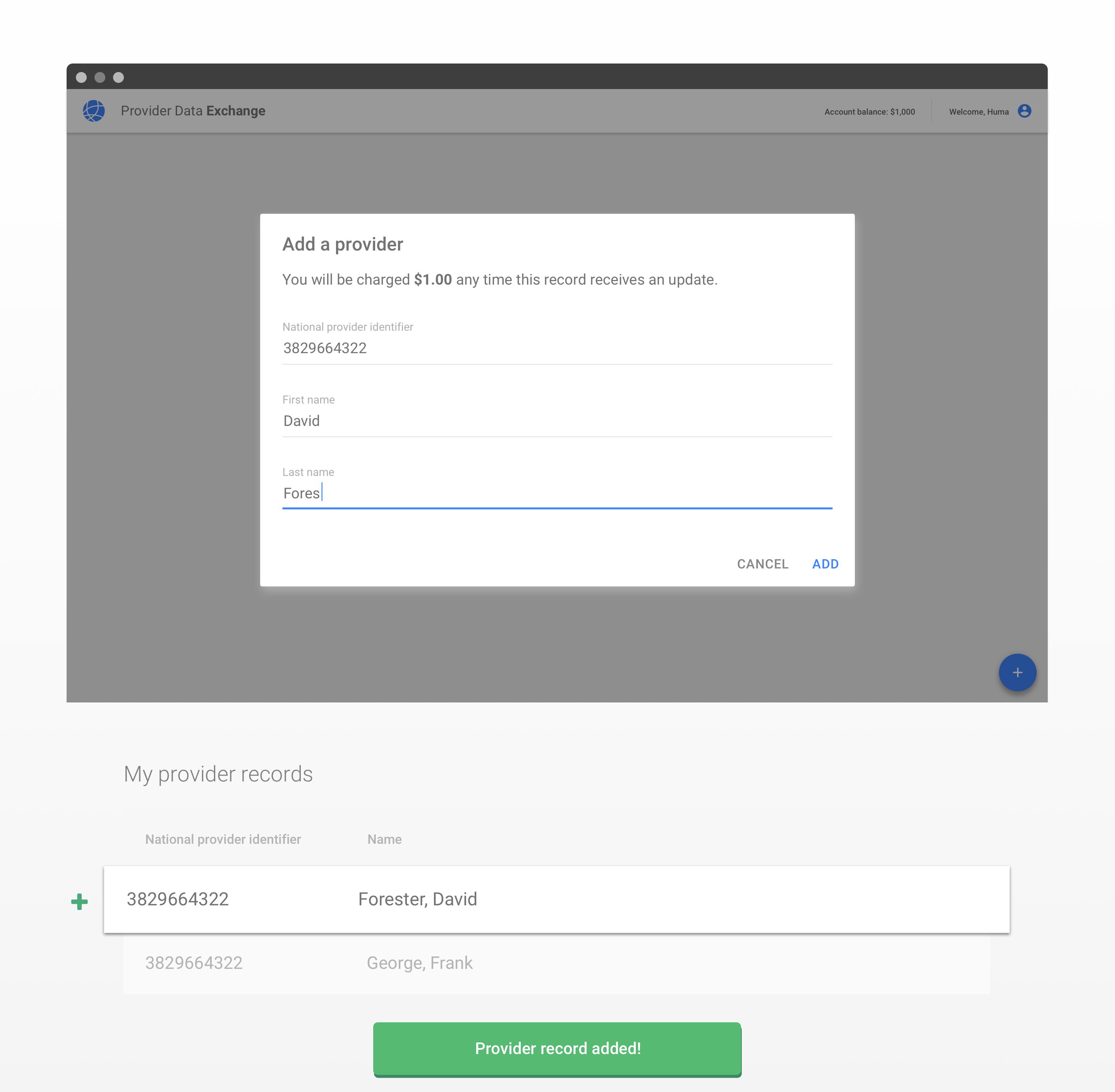
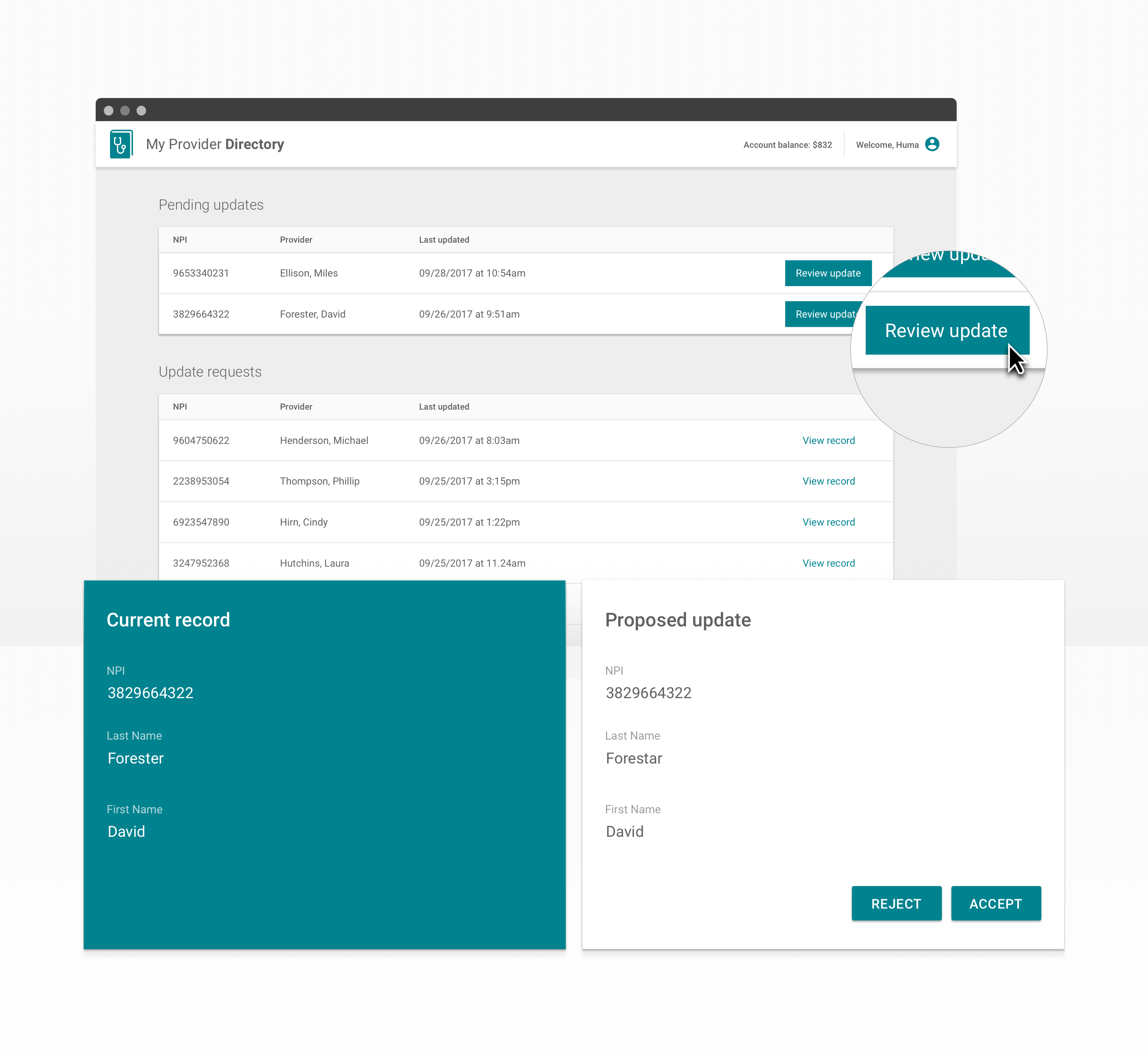
Given our initial hypothesis was based on collaboration, we stood to design a system that allowed disparate entities to share information across silos in a transparent and trustworthy way. Because there isn’t a pre-existing tool for doing this, we explored patterns for adding and exchanging provider records effectively.
Gaining point of view and iterating
With the goal of acquiring point of view about what it’s like managing and sharing provider data, we conducted user research with disparate teams of humans working in data quality management. Below are some perspectives we gained along the way that informed each iteration of software we built.
Perspective 1
Lack of trust lays foundation for data silos
Lack of trust lays foundation for data silos
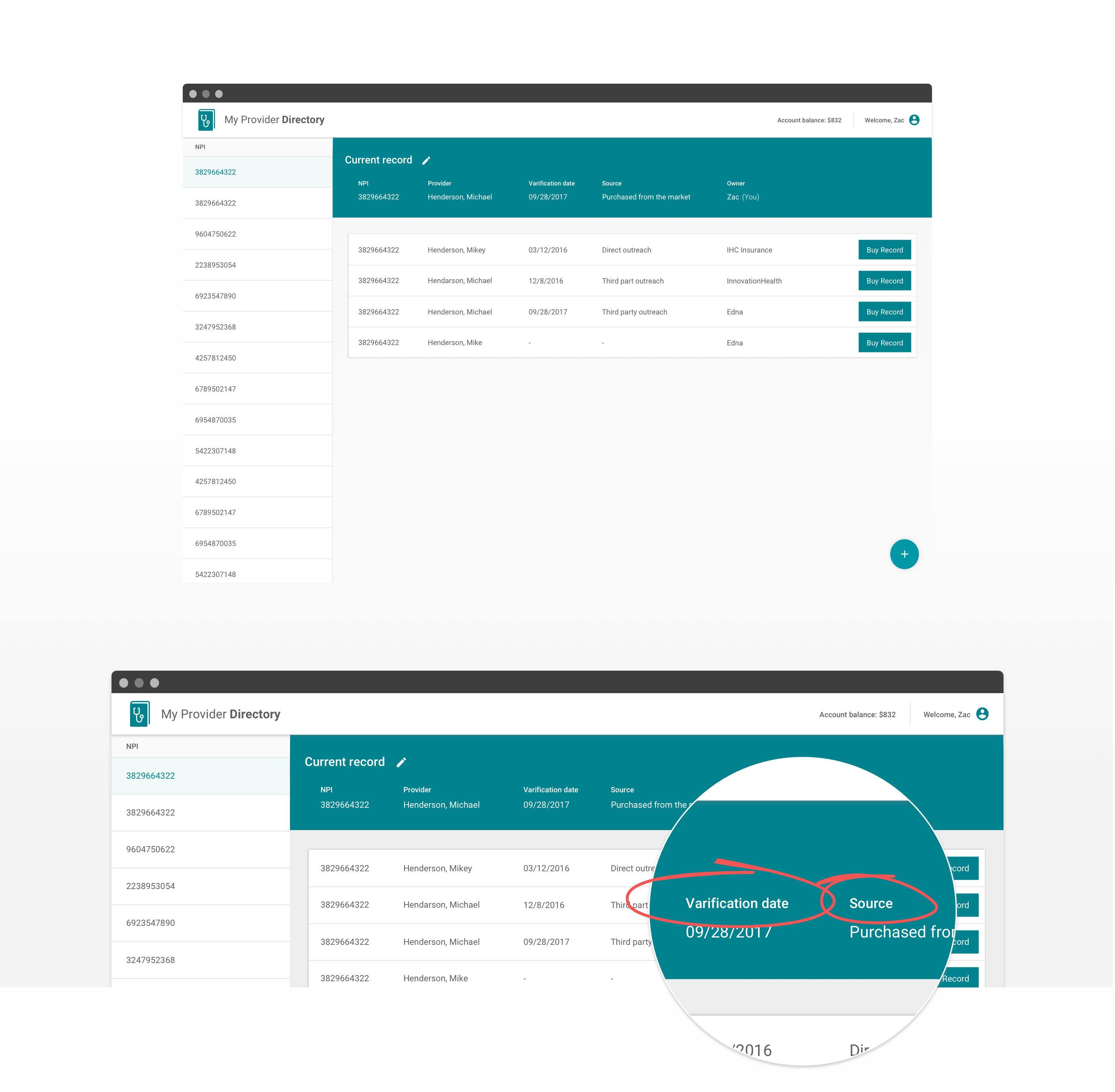
External trust, or lack of thereof, was a common theme in early discovery interviews with our data management team. An important example we kept hearing was in record validation methodologies – we believe that our outreach method was more effective than the competitors’. Because of this, we added additional validation attributes for records where different organizations can add validation source and methodology.
Given the above, we added additional validation attributes for records so that disparate organizations can view another validation source and methodology.
Perspective 2
Transparency builds trust
Transparency builds trust
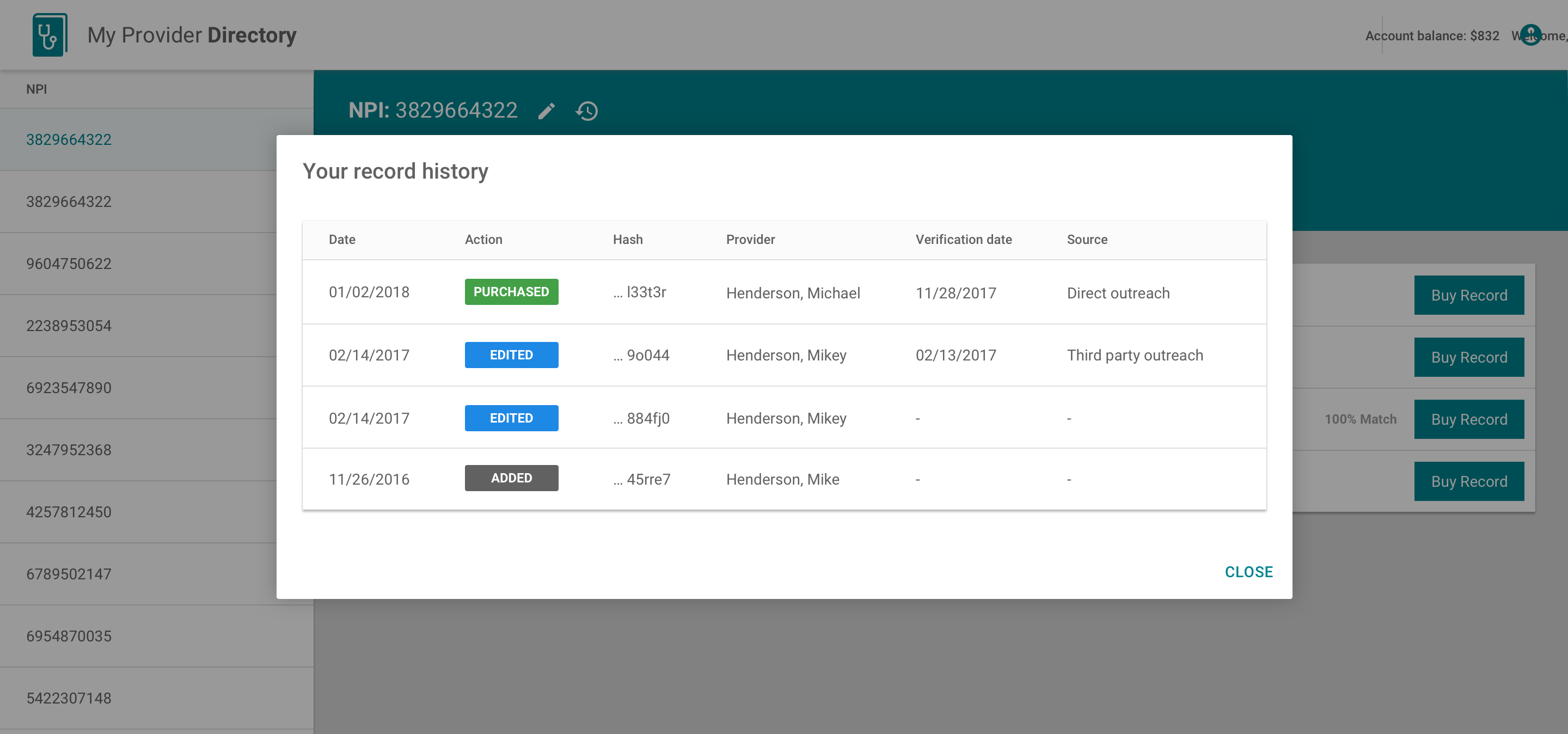
Visibility into a record’s history and understanding context for how it was iterated on was important for trusting another team’s data. The current state of a We added views so that teams can quickly audit another’s record empowering data specialists to make better decisions.
Perspective 3
Consensus helps teams make better decisions
Consensus helps teams make better decisions
Internal paper simulations using rules representing regulatory penalties and cost of provider directory maintenance efforts showed that almost immediately participants began to collaborate and share their records in order to decide how they would split the work and cost.
We updated our record detail views to accommodate discussion between disparate teams.
Perspective 4
External collaboration removes duplicative effort
External collaboration removes duplicative effort
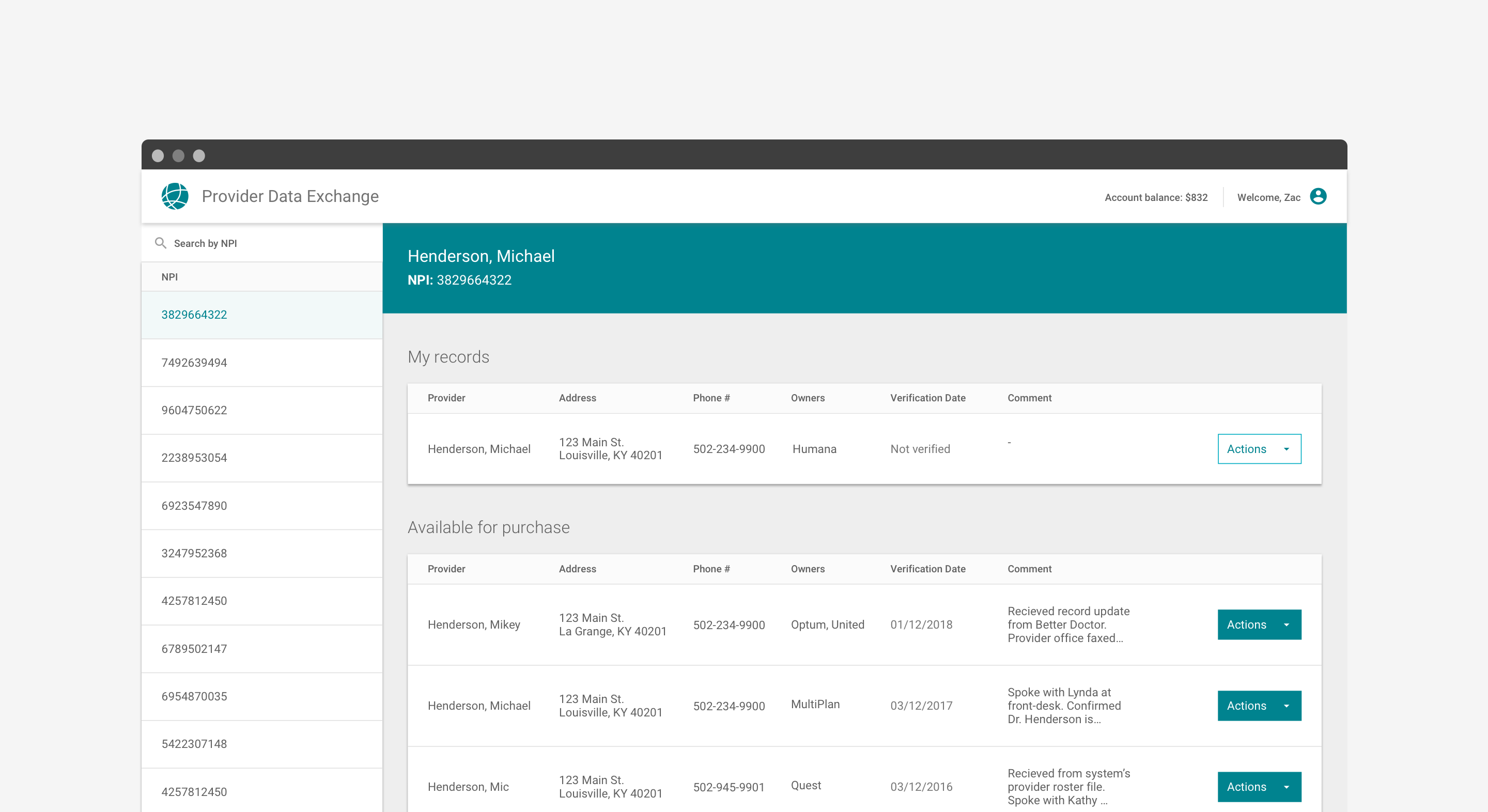
Early on we shadowed our own data management folks which revealed to us the difficult, confusing reality of communicating with doctor’s and credentialing offices to verify the accuracy of provider information. It often took the associate a few attempts at various locations to find a breadcrumb for the next call. Given that other companies are reaching out to the same locations looking for the same information, opening up channels for external collaboration could eliminate this duplicative effort.
Communication tools were validated and added to help actors discuss records.
Looking ahead
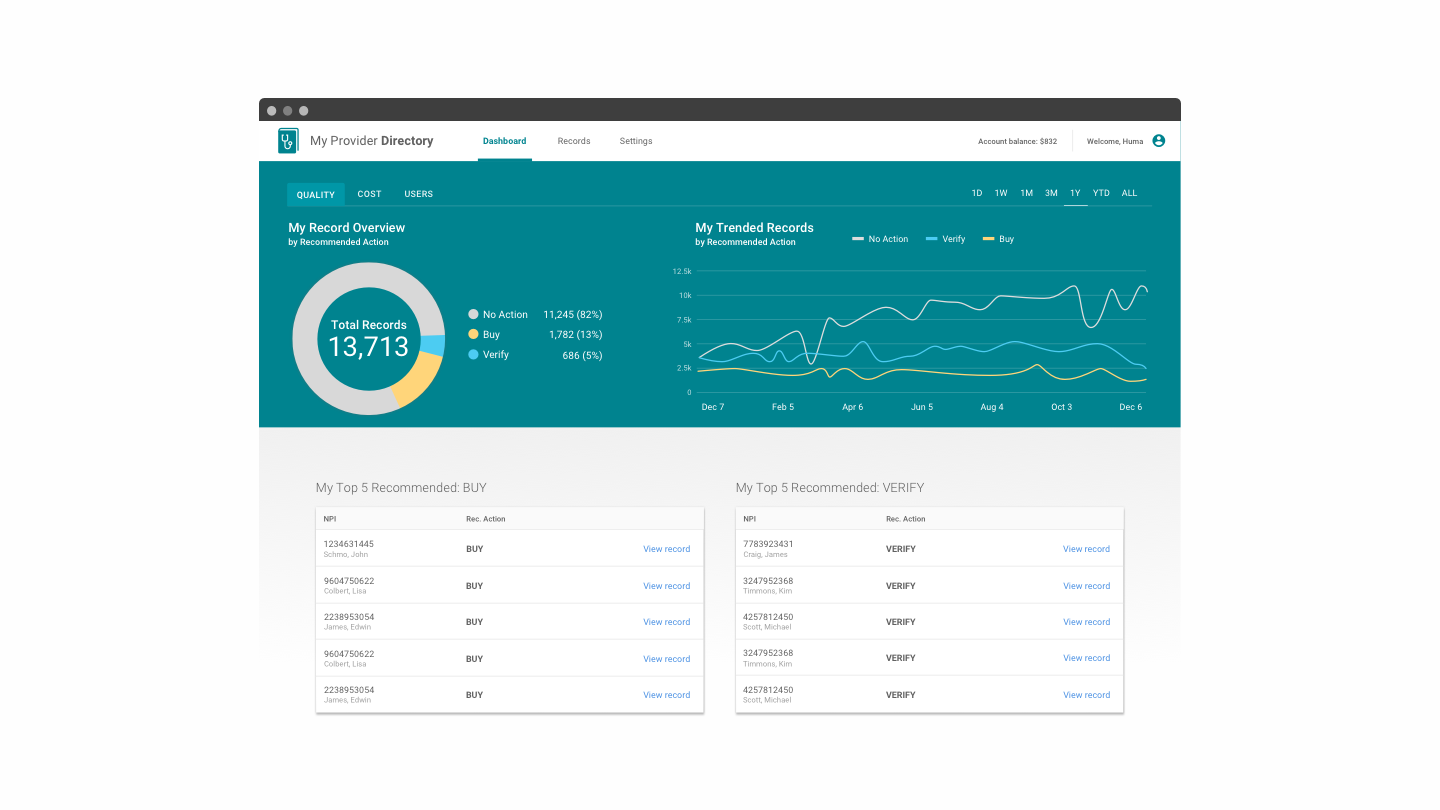
Given that we built and validated a system that allows for external collaboration between healthcare companies, we now can shift focus on how internal teams can better distribute work and boost efficiency.
This could be done through dashboard views and user productivity reports which would require additional user research and testing.
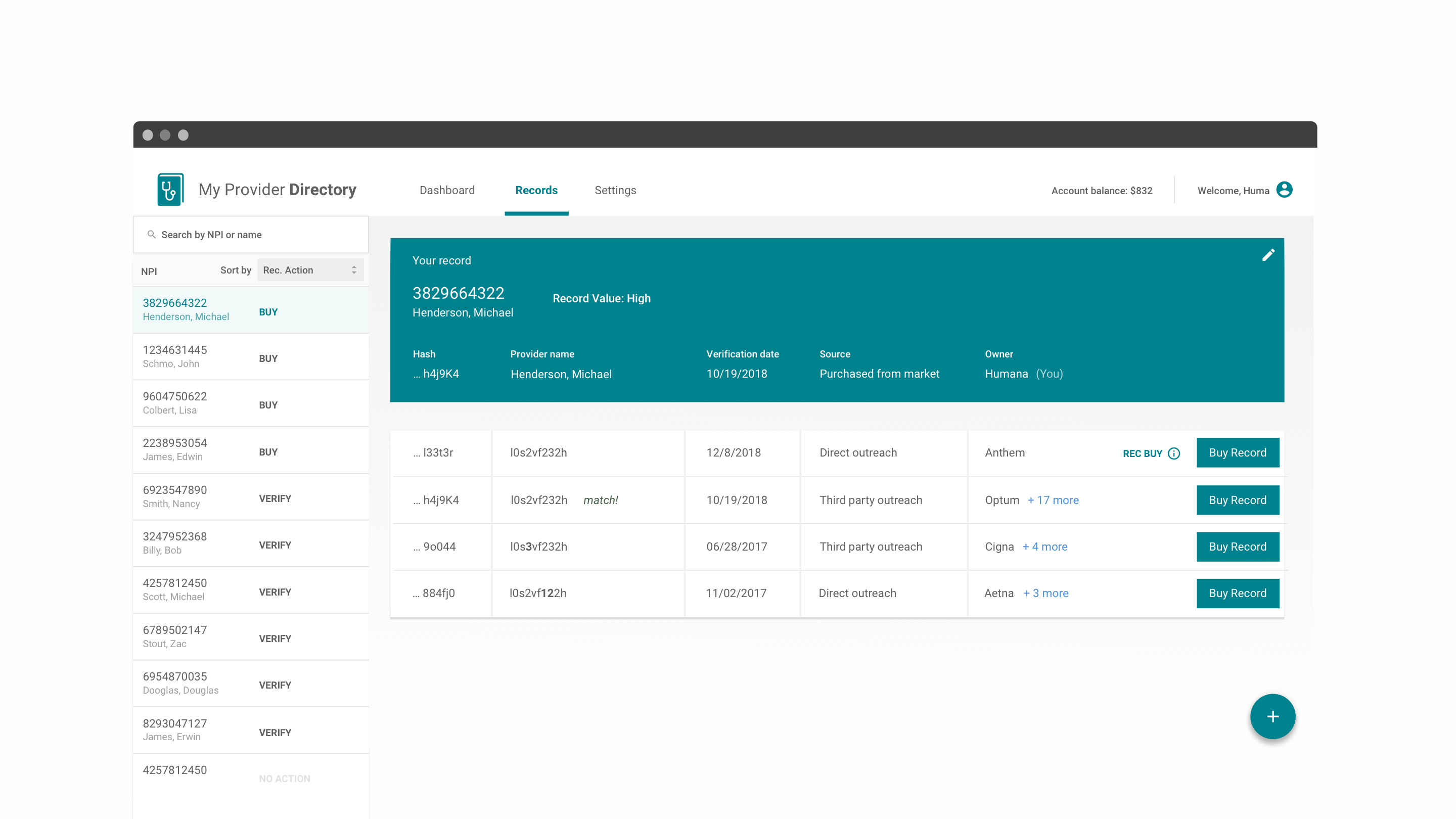
One additional item that will need to be solved for this system to be sustainable is the ‘freeloading’ problem, i.e. the scraping of data attributes from the UI by less resourceful teams.
Blockchain secret contracts with hashed records could be useful for solving this problem. Again, this needs to be tested so that we can learn how to make the most impact.
Additional next steps:
- Continue building knowledge for how healthcare companies can collaborate effectively
- Test and learn how hashing records would work to avoid freeloader problem
- More user testing to improve overall usability
Big picture learnings
Building knowledge and point-of-view through experimentation was a broader goal my team had when we started work on this product. As my time on this assignment came to pass, three key learnings stood out:
-
Scrappy simulations build knowledge fast and cheap
Running early small-scale paper simulations helped test our models which was critical to gaining understanding and perspective about how a data marketplace could work.
-
Removing tribal divisions is a win for healthcare
Working with other actors, including competitors, across the healthcare space can be a transformative experience that reduces waste, increases revenue, and saves lives.
-
Blockchain is suited well for sharing sensitive healthcare data
Storing and sharing data in an open, trustless, and secure way can not be done without utilizing a distributed network that blockchain provides.
Conclusion
Collaboration is a powerful thing. really reduce duplicative effort and drive down cost? What makes sharing healthcare data so difficult? Who are the humans that operate data management and how can we improve the systems that are failing them?